Te Ara Whakamana & the Arts
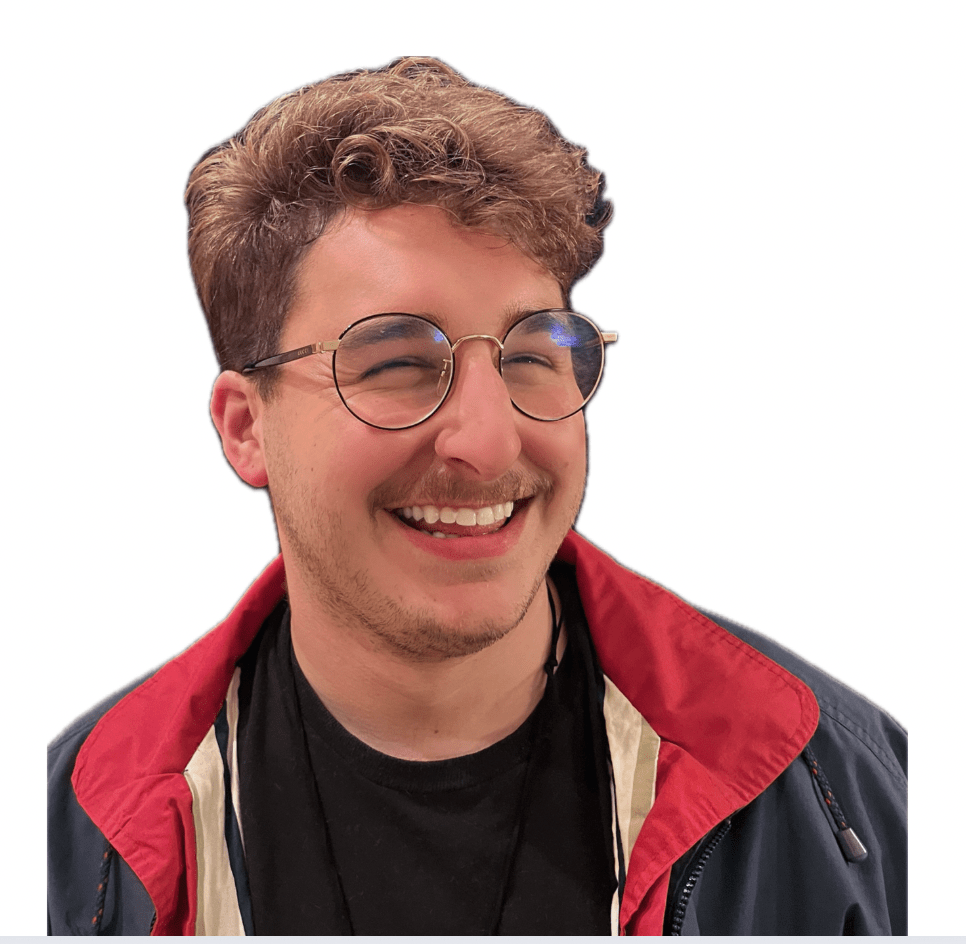
Addi Peters, Ako Nui Syndicate, Dyer Street School
Addi is a Year 5/6 kaiako at Dyer Street School. They have found a succinct niche with the arts in exploring Ngā Atua and their realms that they kaitiakitanga. Incorporating mana-enhancing opportunities within the school in multi-media arts spaces is a clear pathway for ākonga to develop foundations of skills applied to the arts and reinforcing applications of Te Ara Whakamana. Addi will share about Dyer Street’s involvement in ArtSplash (Dance and Wearable Arts), “Crochet Club,” and mixed-media art projects within their akomanga.
Mana Enhancement within a Structured Mathematics approach
Nicole Hawke, Dyer Street School
Nicole Hawke is an experienced Kaiako in the Mathematics space who has been supporting Kura in Te Ngaengae Kāhui Ako with their implementation of the new Mathematics curriculum. Dyer Street School uses trauma-informed practice, UDL, and Te Ara Whakamana principles. Nicole will discuss how she has implemented a DMiC/Pr1me hybrid while staying true to these core values. She will also demonstrate how she has supported and upheld staff mana throughout the implementation of the new curriculum. Additionally, she will be sharing practical strategies that can be implemented quickly into any Mathematics program.

Working with outside agencies while maintaining a mana-enhancement lens
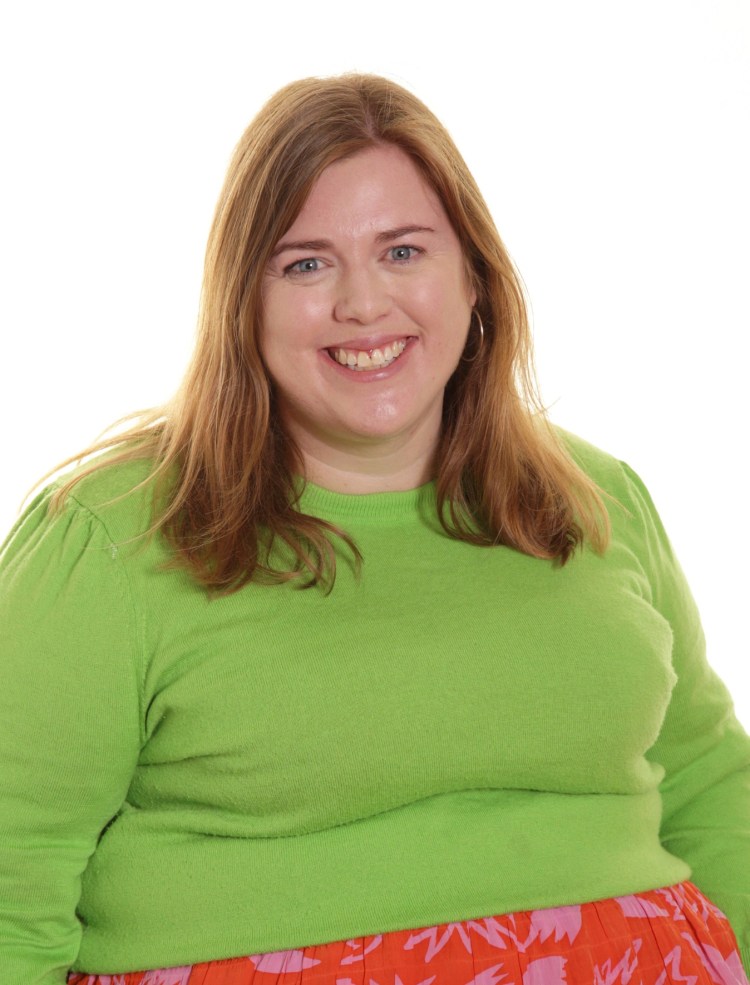
Meg Waghorn, Deputy Principal and SENCO, Dyer Street School
Meg has been Deputy Principal and SENCO at Dyer Street School since 2022. Previously, she was a DP at Te Kura o Te Haukaretu in Upper Hutt. Meg will be sharing strategies and tools for protecting relationships and enhancing mana of ākonga and whānau while engaging with outside agencies such as health systems, Ministry of Education, social work agencies and other external agencies. She will share an escalation plan tool that is used at Dyer Street School to help support tamariki with high behaviour needs.
Te Ara Whakamana and Kōwhiti Whakapae
Sue Hone, Ministry of Education
In 2024 a new entrant classroom in Nelson was finding it a challenge to meet the needs of their diverse learners as well as integrate the framework of Te Ara Whakamana into the culture and tikanga of the classroom for this age group. The school had taken on a whole school approach with Te Ara Whakamana but were still working out how this looked for their 5 – 6 year olds and tamariki with special rights.
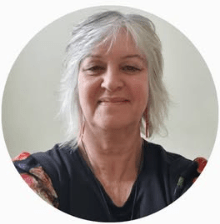
In order to support the teachers and tamariki I aligned the newly created early childhood kaiako resource Kōwhiti Whakapae Social and Emotional Competence with Te Ara Whakamana framework to create an integrated curriculum. Through intentionally combining social and emotional literacy through narratives into all areas of the curriculum teachers began to see changes in themselves and in the tamariki. While not being a magic wand it has certainly supported positive change towards an empowering learning environment for teachers, whānau, and tamariki.
Come and find out how to weave social and emotional awareness into your daily programme through the framework of Te Ara Whakamana without over thinking it. My presentation is aimed primarily at new entrant and Year 1 teachers, however social and emotional learning is for all tamariki so the more the merrier.
Barnardos SWIS Team – Te Awakairangi
Members of the Barnardos Team will share how they use Te Ara Whakamana in their mahi as SWIS (social workers in schools) with Hutt Valley schools, tamariki, and whānau.
Utilising Kia Mana Tū, Kia Mana Ora & Te Ara Whakamana: Mana Enhancement with the GROWTH Coaching Model to support kaiako, kura, whānau, and professionals
Daelan Karangaroa, Ministry of Education Kaitohutohu Marautanga (Curriculum Advisor)
Kia Ora Koutou, my name is Daelan Karangaroa. I am a Kaitohutohu Marautanga (Curriculum Advisor) for the Ministry of Education, based in Wairoa, but working in both Māori Medium and English medium settings in Te Tairāwhiti, Te Wairoa, and Te Matau-a-Māui. Prior to this I was an Resource Teacher of Learning and Behaviour in Cluster 21 based in Wairoa. I will be sharing an overview of how I have been using Te Ara Whakamana as a culturally responsive framework alongside the GROWTH Coaching Model to enable the Mana Enhancing Pedagogy of Rangatiratanga.
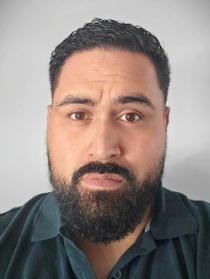
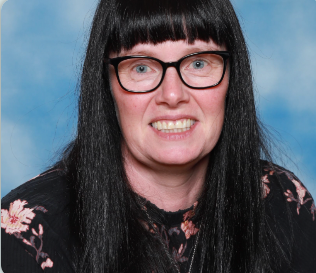
Masterton School’s Te Ara Whakamana journey
Joanna Lennox, Deputy Principal, Masterton Primary School
Joanna Lennox is the Deputy Principal at Masterton Primary School, recognised for her leadership in play-based learning, restorative practice, new entrant pedagogy, and curriculum development. A passionate advocate for inclusive education, Joanna draws on her strong background in special education and her leadership of the school’s Te Ara Whakamana initiative.
With experience across diverse school settings, Joanna leads with empathy, high expectations, and a collaborative spirit that empowers both staff and learners. Her work has had a lasting influence on the school’s culture and community. At the conference, Joanna will share Masterton Primary School’s journey in developing and embedding Te Ara Whakamana, including the school’s approach to data collection, resourcing, and professional learning to ensure consistent, low-variance, and effective implementation of the framework across all classrooms.
Mana enhancement – What Kids Want You To Know
Ngā ākonga o Te Kura o Dyer Street
Children from Dyer Street School will give a presentation on what they believe mana enhancement to be and suggest ways educators and other adults can whakamana tamariki in a school setting.
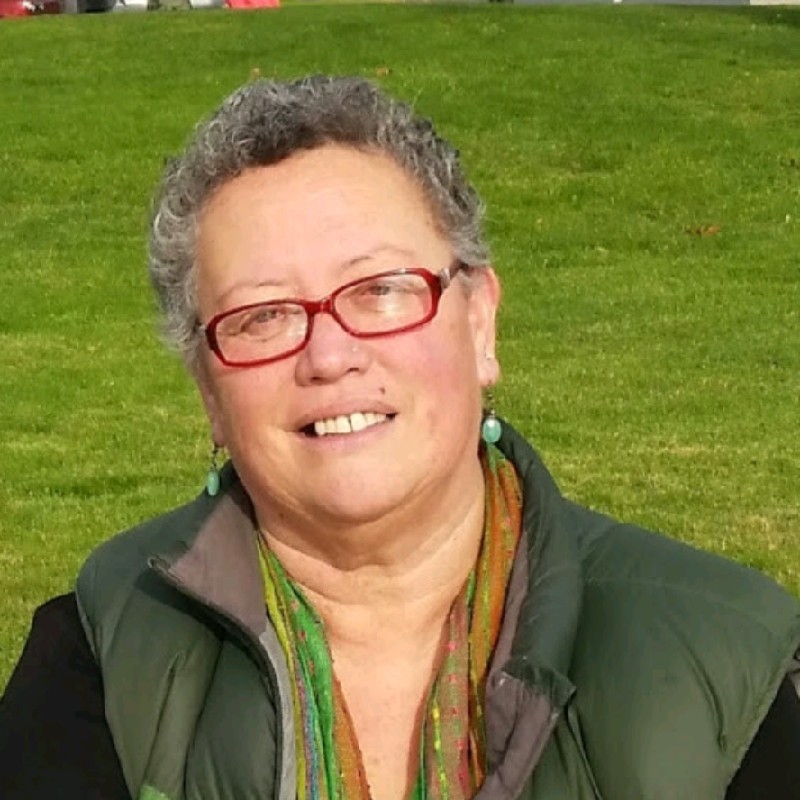
Connecting with whakapapa and Māori identity to support struggling ākonga
Sheryl Brown, LSC, Te Kāhui o Te Ngaengae
Ngati Murikaitaua
Ngā Pikiao te iwi
Ngati Kawiti te hapu
Enuamanu (Atiu)
Akatokamanava ( Mauke)
I am a primary school teacher with many years experience across the sector. Recently and due to my classroom experiences of student behaviour over the years, I have developed a passion for the WHY?, I then was fortunate to undertake a 12 month trauma study with Dr Bruce Perry and his Nuerosequential Model of Education, through the United States. Moving forward and now having done several professional development sessions with Te Ara Whakamana, I can now see how the two compliment each other. I am wanting to share with you some insights to them both, and hopefully some takeaways to help understand our Akonga through a trauma and cultural sensitive lens.
Presenting alongside me will be Kirsten Reid, Deputy Principal from Naenae Primary School. Kirsten has a wealth of knowledge in the trauma space, and is currently training in the Nurosequential Model of Education with Dr Bruce Perry. Kirsten has created an amazing website with a trauma lens, which she will share on the day.
Building authentic relationships and the effects of screen-time on our tamariki
Andrew Wooster, Principal, Randwick School
Kia Ora Koutou. I started teaching in South London, then Brixton in 2000 and returned to NZ in mid-2001 to take up my first teaching role at Hauroko Valley Primary School in South Westland. Here I learnt the importance of building not only strong relationships in school but also in the wider community. Born and raised on the mainland, I moved to Wellington in 2013 with my wife Jane and two children, Samuel and Isabel.
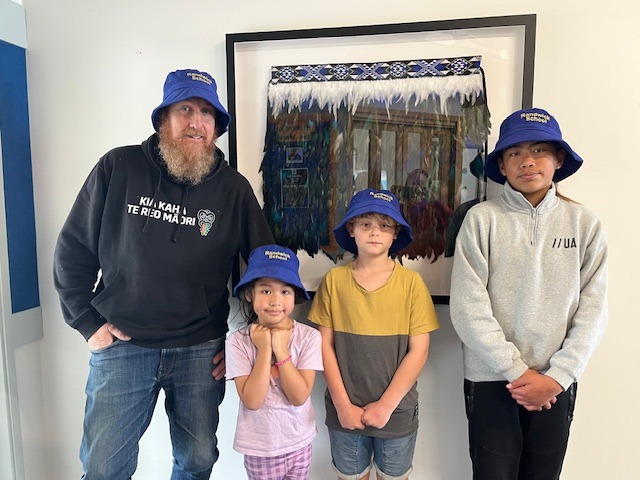
I strongly believe education doesn’t need to be complicated. Ensuring our tamariki are regulated, fed well and feel safe should be our number one priority. We know kids don’t learn and develop positive relationships when these fundamentals are missing, and now with the added stress of smartphones and social media, the need to focus on relationships is even more critical than ever.
Mana enhancement in the early years
Ako Iti Kaiako, Te Kura o Dyer Street
Our syndicate (Ako iti) is committed to enhancing the mana of our tamariki. We weave Universal Design for Learning (UDL) and trauma-informed practices into our teaching, ensuring that every child feels seen, supported, and empowered. Grounded in Te Whāriki, we bring early childhood principles into primary school settings, making learning holistic, responsive, and connected to whānau and culture. Student voice is at the heart of this journey, with cultural committees and leadership opportunities ensuring tamariki are active participants in shaping their learning pathways and school community.
Enhancing the Mana of Gifted Students
Vicki Adam and Alison Holmes, Learning Support Coordinators, Te Kāhui o Te Ngaenae
Vicki and Alison; experienced Learning Support Coordinators from the Naenae Kāhui Ako, present a session on supporting gifted learners. Their presentation aims to share strategies for understanding and meeting the unique needs of these students, with a focus on enhancing their mana (prestige, power, respect).
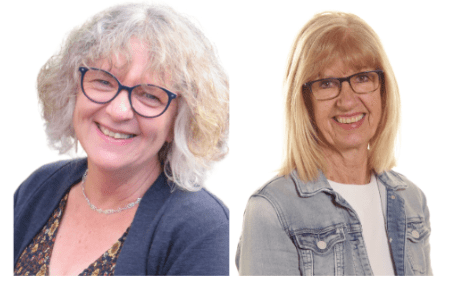
Drawing on over 20 years of experience Vicki has worked in various settings, including regular classrooms, online platforms, and specialist MindPlus teaching. She recently co-created a national toolkit for Learning Support Coordinators, adopted by the Ministry of Education, to help teachers better support gifted students. Her passion is to ensure gifted learners thrive and their mana is enhanced.
Alison brings a career-long dedication to enhancing the mana of all diverse learners. Her extensive experience as a teacher, RTLB (Resource Teacher: Learning and Behaviour), and now LSC, has cemented her practical understanding of inclusive education and catering to a wide spectrum of student needs.
Building a mana-enhancing special needs classroom
Ngā kaimahi o Ruma Waru, Te Kura o Dyer Street
Room 8 is a very special place in our kura, not only where disabled tamariki learn and play, but where other members of the school community also love to be. Our ORS teacher and teacher aide team welcome you to Room 8 for a practical exploration of how we have created a safe, inclusive and vibrant space for our highest needs ākonga. Come and explore our learning space and see some of our mahi.
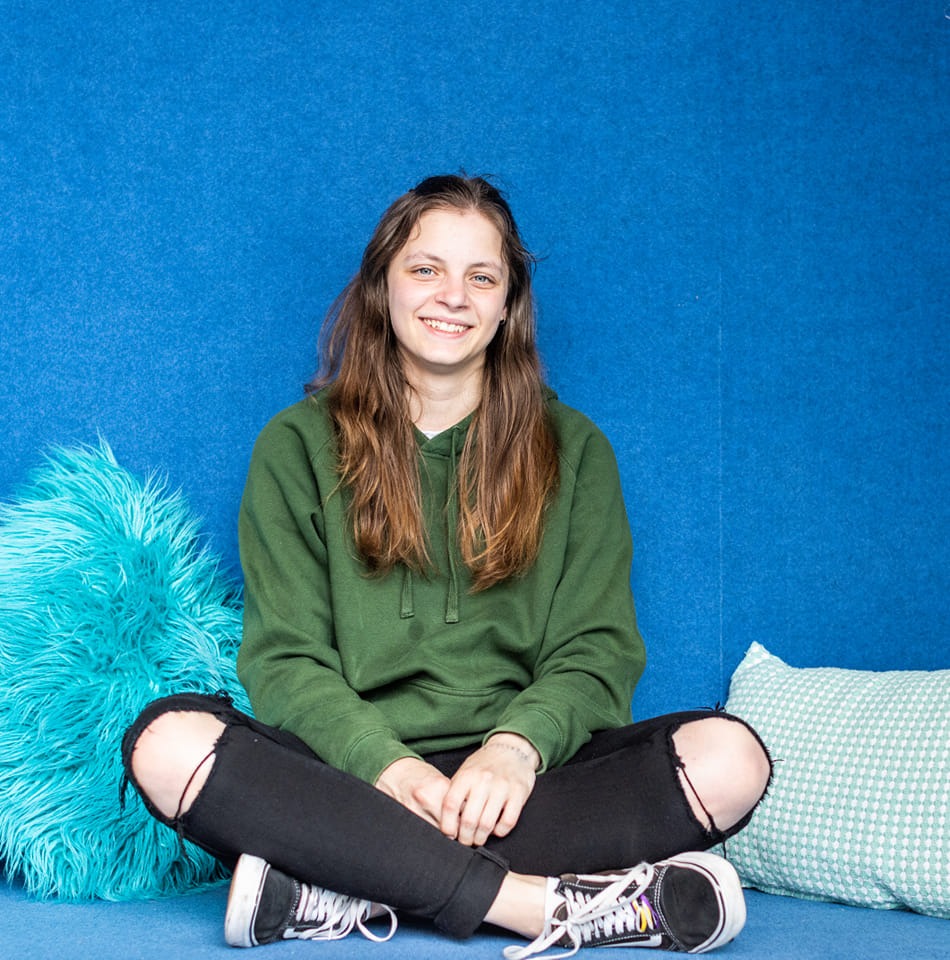
Chanelle Moriah
Chanelle is a neurodivergent author and illustrator who was diagnosed later in life. They are passionate about creating spaces of inclusion and understanding for everyone. They will give a brief overview of what autism and ADHD look like and why individuals may have certain challenges or strengths. They will also discuss dyslexia and Pathological demand avoidance. They aim to start a discussion on how spaces can be adjusted and be more accommodating for different brains.
Chanelle (they/them) is a neurodivergent author and illustrator living in Te Whanganui-a-Tara, Wellington. Moriah’s best-selling books I Am Autistic (Allen & Unwin, 2022) and This is ADHD (Allen & Unwin, 2023) are part of their significant work in disability advocacy.
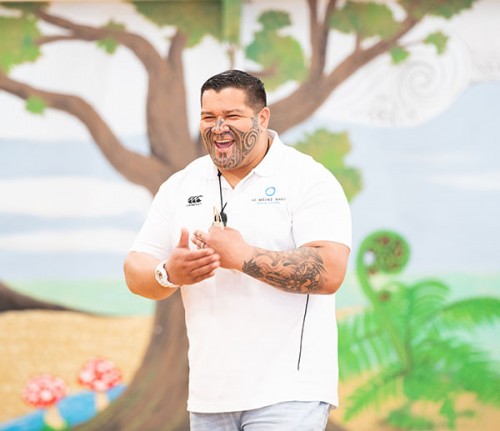
Keynote Speaker – Whaitiri Poutawa
Whaitiri Poutawa (Ngāti Kahungunu, Ngāi Tahu) is the creator and facilitator of He Māori Ahau, a programme that grows wellbeing and positive identity by centring tikanga, whakapapa, and cultural practice so tamariki Māori can succeed as Māori in their kura. He has worked in schools for over a decade and brings a background in youth work, education, emergency response, kapa haka, and taiaha instruction. He previously served as the National Manager for Kaupapa Māori Practice at Corrections and now works at Health NZ as the national Relationship Manager for the Iwi Māori Partnership Boards, partnering with iwi to elevate whānau voice and outcomes. In this kōrero, Whaitiri shares practical ways to embed tikanga Māori into everyday classroom life and shows how tangible cultural identity shapes how students see themselves. The result is increased belonging, confidence, and culturally grounded leadership in Māori learners, along with a school culture that recognises and values te ao Māori.
 Te Ara Whakamana Hui ā Tau